Find out where you stand.
The Driving Coach Readiness Assessment will help you understand what you are bringing into this process and what a structured teaching approach can add to it. It takes about five minutes and it’s free.

How to Teach a Teenager to Drive:


By La Velle Goodwin
Collision Prevention Specialist
Founder, Driving Hero Academy
You have been driving for decades. You have a clean record. You know traffic. So when your teenager got their
learner's permit, it probably seemed reasonable to assume that helping them learn to drive would be, if not
easy, at least manageable.
Then you got in the passenger seat.
If the experience has been anything other than smooth, you are not alone. Discovering there is something
beyond what had been imagined is a very common experience.
Which raises the obvious question: Why is teaching something so simple so hard?
The answer is not what most people expect. And once you understand it, a lot of things that have felt like
personal failures start to look very different - because the reason this is harder than you expected has nothing
to do with your driving ability, your parenting, or your teenager. Most of what makes this hard is not taught to
parents, not covered in standard driver education, and not required knowledge even for professional driving
instructors. Driving instructor certification prepares people to teach students to pass a road test. It does not
require them to understand the deeper safety skills that determine whether a new driver survives the first
years of independent driving. That gap exists at every level of the system. This article is about closing it.
Why Teaching Your Teen to Drive Feels Nothing Like You Expected
Your teenager is behind the wheel. You are in the passenger seat. A risky situation starts to develop in traffic and you can see it clearly. It seems obvious. You find yourself waiting for your new driver to respond to it, assuming they must be seeing what you are seeing. They are not. The risk continues to build. You wait a little longer. Still nothing. And then the moment arrives where waiting is no longer an option. What comes out of your mouth is: "AHH. WATCH. WATCH." Your teenager startles, looks around, and has absolutely no idea what you are reacting to. From where they are sitting, nothing was wrong. They were in their lane. They were at the right speed. Nobody was honking. And now the person next to them appears to be having some kind of episode over nothing. Two people. Same car. Same road. Two completely different understandings of what just happened. This moment, or some version of it, happens to nearly every parent who gets into a car with a new driver. And it is more complex than a simple communication problem. The parent and the teenager are not just using different words for the same experience. They are having completely different experiences. The parent is registering things in traffic, automatically and without thinking, what the new driver does not have the experience to understand yet. It might be the parked car that looks like it could pull out. The pedestrian at the edge of the intersection. The driver who has drifted a little close. The gap ahead that is closing faster than it appears. Not every parent will catch all of it, and they do not need to. The point is that experience, even ordinary everyday driving experience, builds a level of automatic awareness that a new driver simply does not have yet. The parent saw something. The new driver did not. And somewhere in that gap, between what the parent is registering and what the new driver is seeing, is where the teaching challenge lives. The new driver is thinking: signal on, brake… try to stop smoothly, stay in the lane. That is a full cognitive load for someone who has not yet automated any of it. Neither person is failing. They are operating from completely different levels of experience, with no shared language between them, in real time, with no margin for a long explanation. What the parent knows, from years of driving, has never needed to be put into words before. What the new driver hears, without a framework built from shared experience, cannot be fully understood even when words do arrive. The gap between those two realities is what makes the passenger seat so difficult, and what no amount of good intention on either side can bridge on its own. What bridges it is preparation: shared understanding built before anyone gets in the car, a common vocabulary for the tactics and strategies that experienced drivers use to spot and manage risk, and a clear method for conveying all of it in a way that keeps risk as low as possible while the new driver is still learning. That work happens before the driving, not during it.Why Being a Good Driver Does Not Mean You Know How to Teach One
The fact that you have been driving for decades is both the most important thing you bring to this process and the reason that knowing how to teach a teenager to drive feels so unexpectedly hard. Skills we have performed thousands of times become automatic. They move below the level of conscious thought. You merge onto a freeway without narrating the calculation to yourself. You recognize that an intersection has a bad sight line and cover your brake, because you know. You read the "body language" of the car ahead and know, before the brake lights come on, that it is about to slow down. This is how expertise works. The brain gets more efficient by pushing well-practised patterns into the background, freeing up conscious capacity for new information. It is a genuinely useful feature of long experience behind the wheel. It is also, when it comes to teaching someone from scratch, a significant challenge. How do you put into words something your brain processes and acts on without language? How do you teach a sense you have never had to describe? When a situation develops in traffic, there is no time to plan out how to explain it. You need to identify the hazard, find words for a pattern you have never had to name before, keep those words calm and specific enough to actually help, and get them out before the moment has passed. That is a lot to ask of a brain that has never had to do it before. The good news is that the vocabulary already exists. The strategies and tactics that experienced drivers use - and the language to describe it - can be learned and understood by both parent and new driver together, before anyone gets in the car. When both people share the same framework and the same language for what they are doing and why, everything that happens in the car becomes clearer, calmer, and more effective. You do not have to build that from scratch on your own. "WATCH" is not a failure of patience or character. It is what happens when an experienced brain is asked, for the first time, under time pressure, to translate something automatic into something verbal. Nobody has asked your brain to do that before. Of course it struggles. The solution is not to try harder in the car. The solution is to have the language ready before you get in the car. And that requires a vocabulary you have never needed until now, for instincts you have always had but never had to articulate.Why You and Your Teenager See the Road Completely Differently
There is a second problem running alongside the language gap, and it is the source of much of the frustration and disconnection that parents and new drivers experience during lessons. Most parents go into the teaching process assuming, without realizing it, that their teenager already knows how to drive. Not in the literal sense. They know their teenager has never driven before. But unconsciously, they expect the teenager to have the instinctive understanding of distance, space, speed, and risk that only comes from experience. They expect the teenager to respond to situations the way an experienced driver would, because they have forgotten what it was like not to. The skills an experienced driver has were built so gradually, over so many years, that most people genuinely do not remember acquiring them. They do not remember what it felt like to not know how to read a gap in traffic, or to not sense a developing risk, or to not know instinctively how much space is enough. All of that accumulated so slowly and so naturally that it simply became part of how they drive. The gap between where they are now and where their new driver is today is enormous, and largely invisible to them because of exactly how it was built. So when the teenager does something that an experienced driver would never do, the parent's instinctive reaction is: why would you do that? The teenager, who was doing everything they knew how to do, hears that as a personal criticism rather than a reflection of an honest knowledge gap. This is one of the most common sources of anxiety that new drivers experience. There is an entire unspoken understanding of how driving works that experienced drivers carry around without realizing it, and new drivers are expected to have it too, without anyone ever explaining what it is or where it comes from. The new driver can sense that something is expected of them that they do not yet understand. But driving is supposed to be simple. Everyone does it. Admitting that you do not understand something you are apparently just supposed to know feels humiliating. So they say nothing, try to hide the gap, and hope nobody notices.Your new driver is not underperforming. They are exactly where a new driver should be. The
tension comes from an expectation mismatch that nobody made explicit before the driving
started.
The most useful thing a parent can do before the first driving lesson is understand that the in-car session is not where the real teaching should happen. It is where the new driver practices what has already been taught. Getting in the car and hoping for the best is not a strategy. It is how both people end up frustrated. The real teaching should happen in conversation (or a theory session) before anyone gets near the car. And those conversations can cover far more than most parents realize. Take eye lead time as an example. Most new drivers look at the road immediately in front of them, which leaves them reacting to situations rather than anticipating them. An experienced driver looks much further ahead, past the next intersection, beyond what is immediately in front of the car. This is one of the most important skills a new driver can develop, and it can be explained clearly in a kitchen conversation before a single lesson takes place. Why it matters. What it looks like in practice. What happens when you do not do it. Then, in the car, the parent does not need to explain any of that again under pressure. They simply give the new driver a target. "Get your eyes up past the stop sign at the end of the block." The new driver already has the framework. The prompt makes sense. The skill develops. That same two-step approach works for every tactic and strategy an experienced driver uses: explain it before the drive, prompt it during the drive. The in-car session becomes a practice environment rather than a classroom, which is exactly what it should be. And the parent is teaching rather than reacting, which is a completely different experience for both people in the car. There is also a highly effective way for a parent to solve the problem of never having had to verbalize their driving before. Practice doing a running commentary while driving alone. Not occasionally. Regularly. Narrate what you are seeing, what you are watching for, what you are about to do and why. It feels awkward at first. With practice it becomes more and more natural. And it does something important: it sharpens your own awareness of what you actually do while driving, and builds the language you will need when your new driver is behind the wheel. That same running commentary, delivered while the new driver is driving, is one of the most valuable things a parent can offer. It shows the new driver where an experienced mind is looking and when, in real time, as the road unfolds. Traffic patterns repeat. The phrases start to repeat with them. A commentary might sound something like this: "Get your eyes all the way up to the [target], check your mirror, that guy is a little close, adjust your rear view mirror and see if he will back off... coming up to this intersection, check the mirror, to be sure it is safe to brake, signal for the turn, check your mirror. Brake… We're going to stop with the front end in line with the stop line. Complete stop - good. Take a second to make sure of what is going on in the intersection..." That is not a correction. It is a guided experience of how an experienced driver thinks. Over time, the new driver begins to internalize the sequence. The commentary becomes less necessary because the pattern is becoming theirs. As the new driver starts to develop those habits, invite them into the commentary. Make it a game where they have to say it before you do. Their running commentary will tell you exactly what they are seeing, where they are looking, and how their mind is processing the road. It is the closest thing a parent has to being able to see inside the new driver's head - and it will tell you very quickly whether the skills and habits you have been working on are actually taking hold. It also helps to have an honest conversation about the gap itself before any driving begins. A specific acknowledgement of what is actually true: that the parent will see things on the road that the new driver will not see yet, that this is completely normal and expected, that it does not mean the new driver is doing anything wrong, and that when the parent reacts to something, it is because of what they can see, not because of what the new driver did. And honest in the other direction too. The new driver should know that the parent has never had to teach someone to drive before, that translating experience into clear real-time instructions is genuinely hard, and that if the words do not always come out right, that is not frustration with the new driver. It is the challenge of describing something that has never needed to be described before. That conversation does not eliminate the difficulty. But it gives both people a shared understanding of why the difficulty exists, which makes it much easier to navigate when it arrives.What a New Driver Is Actually Thinking About
Understanding what is actually going on in your teenager's head while they first start to drive changes how you respond to what you see from the passenger seat. A new driver is not quietly observing the road and choosing not to act on what they see. They are consumed by the mechanics of operating the vehicle. A turn that an experienced driver executes without a conscious thought has a new driver thinking: "I have to turn so I have to take my foot off the gas and put it on the brake - not too hard! and I have to signal right so I have to push the signal lever down... NO UP!" There is simply no attention left over in those early lessons for reading the broader environment. It is not inattention. It is the reality of learning something from scratch. This is exactly why a progressive plan matters so much. The sooner the mechanics of operating the vehicle become automatic, the sooner the new driver's focus can shift to where it actually needs to be: learning to reading traffic, managing space and risk, and developing awareness that keeps them safe. This is why telling a new driver to "get the big picture" or "watch the road" or "maintain situational awareness" is not wrong advice. It is just far too vague to be useful. Even experienced drivers do not always know what instructors mean by phrases like that. A new driver has no framework to translate them into action at all. What works is specific, pre-taught instruction: when this happens, look here. How will you teach your new driver to know whether to stop or go when the light changes? How can you help them understand how to judge whether there is enough of a gap in oncoming traffic to safely make a left turn? These are not things to teach a new driver in the moment. They are things that need to be understood before the situation arrives in real traffic, so that when it does, the new driver has some understanding to work with.What Driving Schools Typically Cover, and What They Leave Out
When the in-car tension gets to be too much, many parents hand the teaching over to a driving school. This is completely understandable. The conflict is real, the stakes feel impossibly high, and having a professional take over feels like the responsible thing to do. It is worth understanding, though, what the standard driving school model is actually designed to deliver and what a typical driving instructor is trained to do. Driver education in its most common form is structured around preparing students to pass a road test. The road test is a minimum competency assessment. Passing it confirms that a teenager can follow basic rules in a quiet, low risk environment. But it is often assumed to mean something far larger than that. The belief it leaves most new drivers with is that they have now been certified as competent and ready for anything the road can throw at them. That belief is wrong, and it is dangerous. Even in the best training programs (maybe even more so in them) driver education programs rely mainly on parents to provide the bulk of supervised practice a new driver receives before licensing. In practice, the average driving school may deliver somewhere between six and ten hours of in-car time. Without a structured teaching curriculum or training, many instructors default to familiarizing students with the test route, which produces drivers who can pass an assessment but may not yet have the skills that independent driving quickly demands. Basic instructor licensing also does not require the instructor demonstrate that they can teach… many of them have the same struggles parents do with new drivers on the road. Passing a test and being genuinely ready for independent driving are two different things. The gap between them is where most early crashes happen. This is not an argument against driving schools. A good school, used alongside consistent supervised practice, adds genuine value. It is simply worth being clear-eyed about what the standard model delivers, and what it leaves for you to fill in regardless. Most parents are doing more of the teaching than they realize, with or without a driving school in the picture.What Actually Makes a Teen Driver Safe After Licensing
The skills that keep a new driver safe in the first years of independent driving are not the skills the road test measures. Because of that, most drivers enter the driving world with only the bare minimum skills. But real skills to keep them out of crashes can be taught to a new driver if they are built through deliberate, progressive practice over time, with someone in the passenger seat who knows what they are trying to develop at each stage and how to communicate it. It starts before the new driver ever encounters another car on a road. The first lesson belongs in a vacant parking lot, and there is more to cover there than most parents expect. This is where a new driver should learn the things most people assume they will just figure out on the fly: how to correctly position the seat, the steering wheel column, and the head restraint. How to properly adjust the seat belt. How to properly set the mirrors, not just "can you see?" but the specific adjustments that ensure the mirrors are actually doing their job. If a new driver learns to do all of this correctly the first time they sit behind the wheel, they will do it that way every time. Proper mirror and seat adjustment are not just comfort issues. They are critical to a drivers safety. And proper seat belt adjustment is something most people never think twice about, but should. An improperly adjusted seat belt is not a minor inconvenience. In a crash, it can kill the wearer. The protection a seat belt provides is not automatic the moment the buckle clicks. It only works effectively if it is worn correctly. Teaching a new driver to adjust it properly from the very first time they sit behind the wheel is the kind of habit that does not need to be relearned later because it was never done wrong in the first place. The parking lot is also the place to help a new driver understand the area around the car that they simply cannot see from the driver's seat. The blind spots. How the pillars that can hide a pedestrian or another vehicle. The zones around the car we can not see because of our unfortunate inability to see through metal and plastic. Understanding those invisible areas before ever driving on a road is the kind of knowledge that can be trained in an hour. Without this time, new drivers imagine their cars are much larger than they are, have no idea where the corners are or where the wheels land under the car. A good parking lot lesson will fix it all. Smooth acceleration and braking, a solid steering technique- forward and backward, right and left turns - all of these can be developed in a parking lot before the new driver ever encounters another vehicle on a road. Even the sequence for pulling away from a curb or making a lane change (which follow the same steps) can be practised there first: • inside rear view mirror • if it looks safe, signal • check the side mirror, on the way to the blind spot • look well ahead and gently steer • cancel the signal if it does not cancel automatically. That sequence, practised in a parking lot without any traffic pressure, becomes something a new driver can actually execute when it matters. That list of steps is also something you can practice out loud so that you can walk your new driver through pulling away from the curb or making a lane change in real time. The learning progression matters enormously. Time spent on basic vehicle control in a vacant parking lot makes the first drives on a quiet residential street significantly easier. Mastering right and left turns and learning to scan intersections in a residential area builds the foundation for handling busier roads with traffic lights. Managing those roads with confidence makes down town driving easier - when they are ready. And all of that, built progressively and deliberately, prepares a new driver for the demands of freeway merging and high-speed lane changes in a way that does not leave them to figure it out on their own for the first time at highway speeds for the first time. Parents, with the right framework and guidance, can walk a new driver through every one of those stages while building in the tactics and strategies that experienced drivers develop over time. The difference is that the new driver does not have to learn those lessons from experience in the traditional sense - and in the early months of independent driving, that difference matters enormously. If some of what is covered in this section is new to you, don’t be discouraged. These are not things most parents are ever taught, and they are not things most driving instructors are required to know either. The standard for teaching someone to pass a road test does not include any of this. That is precisely the gap this article is trying to close. Eye lead time is a good example of a skill that almost no new driver is explicitly trained to maintain during in- car practice, and it has an outsized impact on safety. Many professional instructors and parents unwittingly set new drivers up to crash by encouraging them to "keep it between the lines." That strategy inadvertently trains a new driver to look at the road immediately in front of the car. Drivers who are not looking far enough ahead wind up in a situation where the speed they are travelling at requires more distance to stop than the distance the driver is looking - which creates, at best, a reactive driver and at worst, a driver who is travelling through what was in front of them before they have time to get their foot to the brake. The difference in crash risk between a driver with good eye lead time and one without it is significant, and it is a trainable skill. It just requires knowing it needs to be trained, and how. Following distance is another. New drivers are often told to maintain a two-second following distance but are not helped to understand why that is critical in traffic. The result is that after they are licensed, drivers often develop the sense that two seconds is overkill. When they drive too close and it does not result in a crash, they develop the sense that two seconds must be for beginners, not someone with their skills, and that practice falls by the wayside. They do not realize that the two-second rule is not arbitrary. It is the bare minimum required at any speed because of the limits of the human brain and physics. Risk perception, the ability to read the road for developing risks, is perhaps the most important skill of all and the one that standard driver education addresses least. It is also, fortunately, something that can be taught explicitly rather than left to accumulate through experience alone.Why Distracted Driving Is More Dangerous Than Your Teenager Thinks
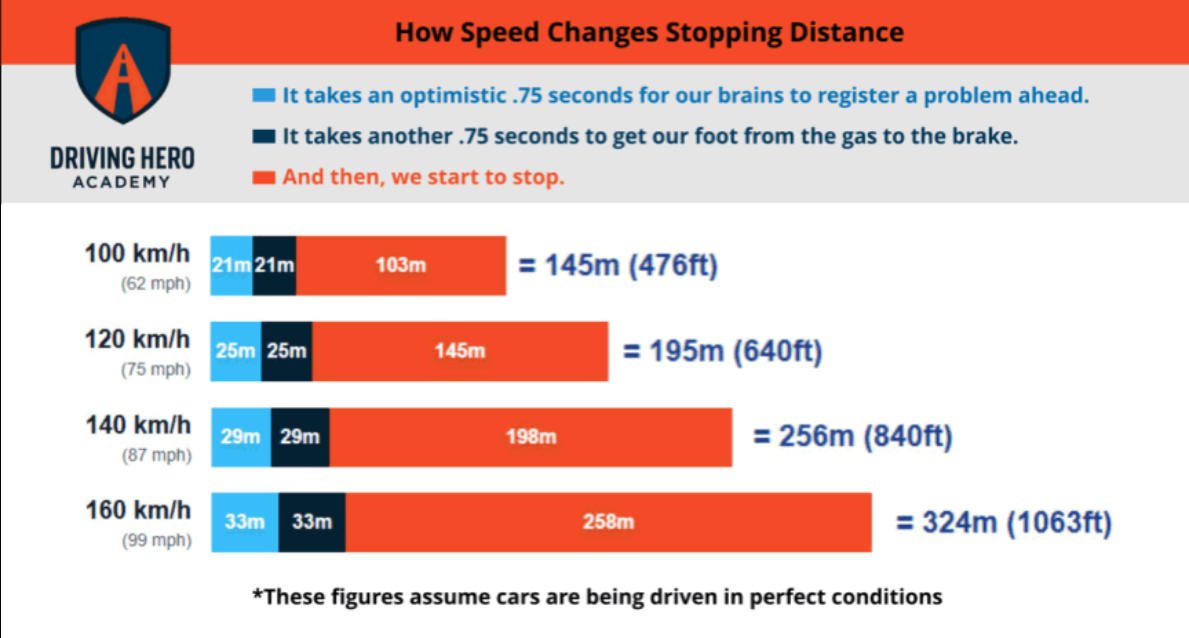
Understanding why eye lead time, following distance, and distracted driving all matter requires understanding something about how stopping actually works, because most drivers, new and experienced alike, have a fundamental misunderstanding of it. Stopping does not happen in one stage. It happens in three, and our brains are effectively blind to the first two. When something happens in traffic that requires you to stop, the first stage is perception: the time it takes your brain to register that a problem exists. According to NHTSA, this takes approximately 0.75 seconds for a focused, alert driver. (Some research suggests that figure is optimistic.) During those 0.75 seconds, your vehicle is not slowing down. It is travelling at full speed. The second stage is reaction: the time it takes to move your foot from the gas pedal to the brake. That takes another 0.75 seconds. Your vehicle is still not slowing down. It is still travelling at full speed. Only in the third stage, when the brake is actually being pressed, does the vehicle begin to stop. At 30 km/h (18 mph), your vehicle travels approximately 6 metres (6.5 yds) in those first 0.75 seconds while your brain registers the problem. It travels another 6 metres (6.5 yds) while your foot moves to the brake. And then it takes a further 6 metres to actually stop - assuming perfect road and vehicle conditions. So while your brain perceives that you need 6 metres to stop, you actually needed 18. You were already 12 metres into your stopping distance before braking even began. As speed increases, the distance travelled in each of those stages increases significantly.
This is why "keep it between the lines" is such dangerous instruction. It trains a new driver to look at the road
immediately in front of the car. A driver looking that close to the vehicle has almost no time to perceive and react to
anything that develops further ahead, and their full perception-reaction distance is already spent before braking
even begins. The driver who is looking far enough ahead is the driver who sees a problem developing before it
becomes an emergency.
Now apply this to distracted driving.
When a driver looks at their phone, a map screen, or their passenger, the thought is usually "it is just a couple of
seconds." Research shows that drivers consistently underestimate how long they actually look away, but for the
sake of argument, accept the two seconds at face value. The issue is not the time. It is the distance travelled in 2
seconds.
At 50 km/h (31 mph), two seconds of looking away means your vehicle has travelled approximately 28 metres (30
yds) while you were seeing nothing that was happening in traffic. When you look back up, something may have
changed in the traffic scene in front of you. Now your full perception time and reaction time still have to run their
course before braking even begins. The distance in which you are effectively blind is added directly on top of the
distance you were already going to need just to stop.
No driver, regardless of training, experience or skill, can text and drive safely. Not because they lack discipline.
Because physics does not negotiate.
How to Structure a Driving Lesson That Actually Builds Skills
Before getting into the specifics of how to structure each session, there is a mindset shift that changes everything about how the teaching relationship works. Think of yourself as driving the car through your new driver. You are guiding them, the one deciding where the lesson takes place, what skills are being practised, and when the environment is appropriate for where your new driver actually is in their development. That means if something goes wrong, the accountability sits with you, not with them. You put them there. You called the shots on where, when, and how. This is not about blame. It is about protection - for the new driver's confidence as much as for their safety. A teenager who makes a mistake in an environment they were not ready for does not need to hear frustration, yelling, blame or silence. They need to hear: "I am sorry, I did not explain that well enough, let us try again." Or: "I am sorry, I should not have had you on that road yet, we were not ready for it." That kind of accountability from the parent preserves the new driver's sense of "I can do this" at the moments when it is most fragile. And it keeps the parent honest about progression - because a parent who knows they are responsible for the environment is far less likely to push a new driver into situations they are not ready for. The new driver is relying on the parent to keep this safe and to make good decisions about when to advance and when to stay put. Owning that responsibility is what makes the difference between a teaching relationship built on trust and one built on tension. With that foundation in place, a few specific practices make a consistent difference to how each in-car session actually goes. Learn to control the car from the passenger seat. Before any in-car lessons begin, a parent should know how to manage as much of the car as possible from the passenger side. This is not about being dramatic. It is about having genuine options if a situation develops that the new driver cannot handle. Knowing where the controls are, what you can reach, and how to use your voice to guide a correction calmly is part of being prepared, not part of panicking. (In my opinion, the best training cars are older vehicles with a hand brake.) Plan the lesson, not just the drive. Before each session, know specifically what skill you are going to work on and why it comes at this point in the learning progression. Then make it the new driver's job to plan a route that will give you the opportunity to practice that skill, without accidentally ending up on a freeway on-ramp before either of you is ready for it. Have them share the planned route with you before you leave so that both of you know exactly where you are going and what you are working on. A new driver who has thought about the route is less anxious and feels more prepared. A parent who has a plan with a specific goal for the session is less likely to find themselves reacting to the unexpected. Name the location before the action. When giving directions, always say where first, then what you want the new driver to do. "At the stop sign, we will turn right" rather than "turn right at the stop sign." This simple sequence gives the new driver's brain time to process and prepare rather than react. It reduces anxiety and produces smoother, more controlled responses. It sounds like a small thing and it makes a very real difference. Never move to a more complex environment until the current one is genuinely solid. The instinct to progress quickly is understandable. The new driver is eager, the parent wants to feel like things are moving forward. But introducing complexity before the underlying skills are automatic does not accelerate learning. It creates stress, builds bad habits, and erodes confidence on both sides of the car. Each environment, from the parking lot to residential streets to arterial roads to highways, should feel genuinely comfortable before the next one is introduced. If it does not feel comfortable, they are not ready.The Thing About the Back Seat
Long before your teenager ever sat behind a wheel, they were already learning to drive. From the back seat. Watching you. The way you handle a merge. Your following distance. How you respond to a driver who cuts you off. What you do when you are running late and traffic is not cooperating. They absorbed all of it, for years, without either of you realizing it was happening. This is not a reason for alarm. Most experienced drivers manage traffic reasonably well most of the time. But it does mean that some of what you are working to build in your teenager has already been taking shape, formed silently, without a lesson or a word ever being exchanged. Some of those absorbed patterns will be good ones. Some may be habits you would not have chosen to pass on if you had known you were passing them on. Understanding that is not about assigning blame. It is about recognizing that the two of you are in this together in a more complete way than you might have realized. The conversations you have about driving, the framework you build together before you get in the car, and the deliberate attention you bring to the teaching process matter more than any single lesson. No driving school timetable to road test can match you in this process. You can take the time to really make sure they get it. You will take their skill development more seriously because no hourly wage driving instructor loves your kid as much as you do and they have more students waiting in the wings. The very best instruction can only come from the person in the passenger seat who has the most at stake, and who knew this teenager long before they ever got behind a wheel. If you would like some guidance, we do that. Being a good driver and teaching someone else to drive are two very different skills. Every parent who has found the passenger seat harder than expected has not discovered something wrong with themselves. They have discovered exactly what this article is about. The knowledge gap is real, it is normal, and it is entirely bridgeable. A parent who understands what is actually happening in that car, who prepares before the drive rather than improvising during it, and who meets their new driver where they genuinely are rather than where they imagine them to be, is the most valuable thing a new driver can have. Not because they are a professional instructor. Because they are invested in this outcome in a way no professional instructor ever could be. That is enough. With the right preparation, it is more than enough.Frequently Asked Questions
Why is teaching my teenager to drive causing so much conflict?
There is rarely just one cause. The tension in the car usually comes from several things happening at once, and different families run into different combinations. Some of the most common: • The language gap. The parent sees a risk developing and reacts to it, but has no words ready to explain what they saw or why it mattered. What comes out sounds like alarm or criticism. The new driver, who was not seeing what the parent was seeing, has no idea what just happened. • The expectation gap. Some parents unconsciously expect the new driver to respond to traffic the way an experienced driver would. The new driver is doing everything they know how to do. The gap between those two realities produces frustration on both sides without either person understanding why. • The new driver who thinks they already know. Most new drivers believe, sincerely, that they have a reasonable handle on this. They have been watching people drive their entire lives. When a parent raises a concern the new driver cannot see the point of, it reads as over-protectiveness rather than expertise. The parent ends up in an argument they cannot easily win, because the new driver has no framework yet to understand what the parent is actually seeing. • No plan. Many parents get in the car expecting to teach as they go. Without a clear progression, a specific focus for each session, and shared language built before the drive, the lesson defaults to reaction. Reactive teaching in a moving vehicle is stressful (and ineffective) for everyone. • The authority problem deserves a specific mention. Even when a parent is completely right about something, getting a teenager to accept it is not always straightforward. One of the advantages of working within a structured, research-backed program is that the guidance stops being just the parent's opinion. When what you are teaching has already been validated by an established system, the dynamic shifts. You are no longer asking them to take your word for it. That changes the conversation.Am I qualified to teach my teenager to drive?
The better question is whether you are prepared. Every parent brings real value to this process: years of accumulated road sense, genuine knowledge of their teenager, and a personal investment in the outcome that no hourly instructor can match. What most parents find challenging, without specific preparation, is translating what they know instinctively into language a new driver can actually use. That gap is bridgeable with the right approach.My teen just passed their road test. Is that not enough?
The road test confirms minimum competency in calm, controlled conditions. It is not designed to assess readiness for real-world driving: highway entry at speed, managing unpredictable drivers, handling unexpected hazards, or reading developing traffic patterns. Crash risk is highest in the months immediately after licensing, which reflects exactly this gap. Passing the test is the beginning of the process, not the end of it.How much practice does my teenager actually need before driving alone?
There is no reliable magic number. Most licensing programs across North America require somewhere between 40 and 60 hours of supervised practice before a teenager can test for an unrestricted license, and some states and provinces require more. But research has consistently found no clear relationship between hours logged and crash rates after licensing. A new driver who has practised 60 hours on familiar quiet streets is not necessarily safer than one who has practised 30 hours across a genuine range of environments, conditions, and traffic situations. The question to ask is not whether enough hours have passed, but whether the skills required for each environment have been genuinely mastered before moving to the next one.Would a driving school not be better than teaching my teenager myself?
A driving school and a parent are not an either/or choice. Standard driver education is structured to prepare students for the road test, which is a minimum competency assessment. Most programs deliver a limited number of in-car hours and depend on parents to provide the majority of supervised practice time regardless of whether a school is involved. The parent's role in producing a genuinely skilled driver is larger than most people realize, with or without a driving school in the picture.How will I know when my teenager is actually ready to drive
independently?
A new driver is genuinely ready for independent driving when vehicle control is automatic rather than effortful, when they consistently notice developing hazards before those hazards require a reaction, and when they make sound, calm decisions across a full range of conditions including highways and higher-traffic environments. These are observable behaviours, not a feeling. If you are not sure whether your teenager has reached this level, err on the side of more supervised practice.How do I stay calm when my teenager does something that scares me?
Understanding the many reasons why it happens is the first step. Parents lose their composure in the car for several reasons that all arrive at once: • They are seeing risks their new driver cannot see yet, and the gap between what seems obvious to the parent and what the new driver is registering is genuinely alarming. • They feel helpless on the passenger side, unsure of what they can actually do if something goes wrong. • They went in expecting to teach as they go, and discovered that winging it is a terrible strategy. • They do not have language ready for what they are seeing. • They are trying to meet a new driver where they imagine they are, rather than where they actually are. Any one of those things would be stressful. All of them together produce panic. The solution is preparation that addresses each of them specifically: know what you can do from the passenger seat before you get in the car. Have a progressive plan so you are never in an environment the new driver is not ready for. Build the language before the drive. And understand from the start that being a good driver and teaching someone else to drive are two very different skills. The parents who go in knowing that are significantly calmer than the ones who find it out the hard way.How do I talk to my teenager about phones and distracted driving?
Don’t make it a conversation about rules. crash statistics, or trust, and make it a conversation about physics. The section in this article on why distracted driving is more dangerous than your teenager thinks covers this in detail, but the core of it is this: stopping does not happen the moment you decide to stop. By the time your brain registers a problem and your foot reaches the brake, your vehicle has already travelled a significant distance at full speed. Looking away from the road for even two seconds adds that entire distance on top of an already existing handicap. At 50 mph, two seconds of looking at a phone means your vehicle has covered the length of half a football field while you were seeing nothing. When you look back up, your full perception and reaction time still has to run its course before braking even begins. This is not a judgment about discipline or maturity. It is a physics problem, and physics applies equally to every driver regardless of how good they think they are. A teenager who understands the actual numbers is in a much better position to make an informed decision than one who has simply been told not to. Show them the numbers. Walk them through the stopping distance section together. It is a harder argument to dismiss than "because I said so." References Simons-Morton, B. et al. Parent Involvement in Novice Teen Driving: Contributions to Research, Practice and Policy. Journal of Safety Research, 2006. Insurance Institute for Highway Safety. Teenagers: Graduated Licensing. 2024. Children's Hospital of Philadelphia and State Farm. Driving Through the Eyes of Teens. National Highway Traffic Safety Administration. Teen Driving.About the Author
La Velle Goodwin is a collision prevention specialist and the founder of Driving Hero Academy. She spent 13 years as a senior instructor at one of North America's most rigorous driver training organizations, completing a certification requiring substantially deeper training in crash causation, driver psychology, and instruction methodology than standard driving instructor licensing, with mandatory annual recertification. She delivered the organization's commercial driver training program, working directly with experienced professional drivers and observing first-hand the psychological resistance that makes behaviour change so difficult to achieve in that population. After leaving, she founded a corporate entertainment company whose programs were built entirely on competitive psychology - using the human drive to compete to move people toward behaviour they would never choose if simply told to. That work ran for over a decade across clients including oil and gas companies, Canada Post, and the Calgary Board of Education. The Crash Proof System brings those two bodies of expertise together: the science of how collisions develop, and the psychology of what actually makes people change.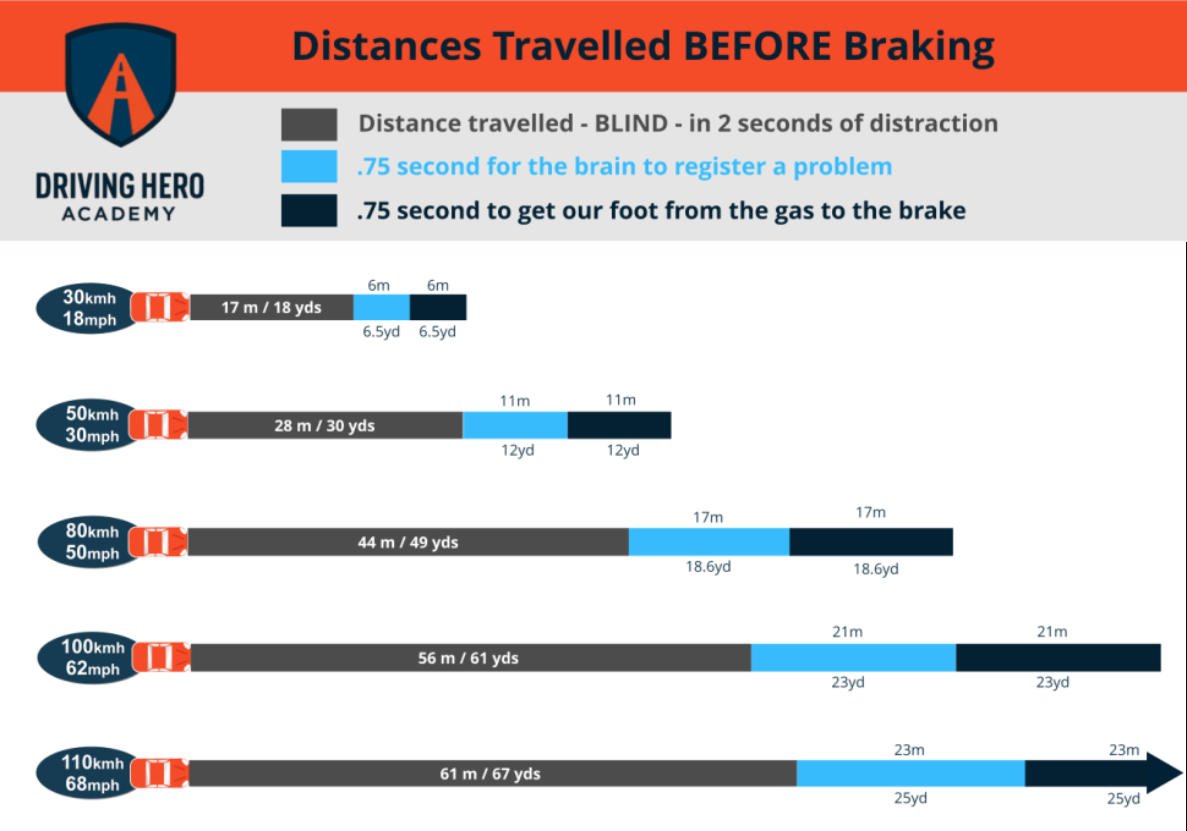






ACADEMY



DRIVING HERO


What Nobody Tells Parents
Before They Get in the Car












How to Teach a
Teenager to
Drive:

Privacy Policy | Terms

By La Velle Goodwin
Collision Prevention Specialist
Founder, Driving Hero Academy
You have been driving for decades.
You have a clean record. You know
traffic. So when your teenager got
their learner's permit, it probably
seemed reasonable to assume that
helping them learn to drive would
be, if not easy, at least manageable.
Then you got in the passenger seat.
If the experience has been
anything other than smooth, you
are not alone. Discovering there is
something beyond what had been
imagined is a very common
experience.
Which raises the obvious question:
Why is teaching something so
simple so hard?
The answer is not what most
people expect. And once you
understand it, a lot of things that
have felt like personal failures start
to look very different - because the
reason this is harder than you
expected has nothing to do with
your driving ability, your parenting,
or your teenager. Most of what
makes this hard is not taught to
parents, not covered in standard
driver education, and not required
knowledge even for professional
driving instructors. Driving
instructor certification prepares
people to teach students to pass a
road test. It does not require them
to understand the deeper safety
skills that determine whether a
new driver survives the first years
of independent driving. That gap
exists at every level of the system.
This article is about closing it.
Why Teaching Your
Teen to Drive Feels
Nothing Like You
Expected
Your teenager is behind the wheel. You are in the passenger seat. A risky situation starts to develop in traffic and you can see it clearly. It seems obvious. You find yourself waiting for your new driver to respond to it, assuming they must be seeing what you are seeing. They are not. The risk continues to build. You wait a little longer. Still nothing. And then the moment arrives where waiting is no longer an option. What comes out of your mouth is: "AHH. WATCH. WATCH." Your teenager startles, looks around, and has absolutely no idea what you are reacting to. From where they are sitting, nothing was wrong. They were in their lane. They were at the right speed. Nobody was honking. And now the person next to them appears to be having some kind of episode over nothing. Two people. Same car. Same road. Two completely different understandings of what just happened. This moment, or some version of it, happens to nearly every parent who gets into a car with a new driver. And it is more complex than a simple communication problem. The parent and the teenager are not just using different words for the same experience. They are having completely different experiences. The parent is registering things in traffic, automatically and without thinking, what the new driver does not have the experience to understand yet. It might be the parked car that looks like it could pull out. The pedestrian at the edge of the intersection. The driver who has drifted a little close. The gap ahead that is closing faster than it appears. Not every parent will catch all of it, and they do not need to. The point is that experience, even ordinary everyday driving experience, builds a level of automatic awareness that a new driver simply does not have yet. The parent saw something. The new driver did not. And somewhere in that gap, between what the parent is registering and what the new driver is seeing, is where the teaching challenge lives. The new driver is thinking: signal on, brake… try to stop smoothly, stay in the lane. That is a full cognitive load for someone who has not yet automated any of it. Neither person is failing. They are operating from completely different levels of experience, with no shared language between them, in real time, with no margin for a long explanation. What the parent knows, from years of driving, has never needed to be put into words before. What the new driver hears, without a framework built from shared experience, cannot be fully understood even when words do arrive. The gap between those two realities is what makes the passenger seat so difficult, and what no amount of good intention on either side can bridge on its own. What bridges it is preparation: shared understanding built before anyone gets in the car, a common vocabulary for the tactics and strategies that experienced drivers use to spot and manage risk, and a clear method for conveying all of it in a way that keeps risk as low as possible while the new driver is still learning. That work happens before the driving, not during it.Why Being a Good
Driver Does Not Mean
You Know How to
Teach One
The fact that you have been driving for decades is both the most important thing you bring to this process and the reason that knowing how to teach a teenager to drive feels so unexpectedly hard. Skills we have performed thousands of times become automatic. They move below the level of conscious thought. You merge onto a freeway without narrating the calculation to yourself. You recognize that an intersection has a bad sight line and cover your brake, because you know. You read the "body language" of the car ahead and know, before the brake lights come on, that it is about to slow down. This is how expertise works. The brain gets more efficient by pushing well-practised patterns into the background, freeing up conscious capacity for new information. It is a genuinely useful feature of long experience behind the wheel. It is also, when it comes to teaching someone from scratch, a significant challenge. How do you put into words something your brain processes and acts on without language? How do you teach a sense you have never had to describe? When a situation develops in traffic, there is no time to plan out how to explain it. You need to identify the hazard, find words for a pattern you have never had to name before, keep those words calm and specific enough to actually help, and get them out before the moment has passed. That is a lot to ask of a brain that has never had to do it before. The good news is that the vocabulary already exists. The strategies and tactics that experienced drivers use - and the language to describe it - can be learned and understood by both parent and new driver together, before anyone gets in the car. When both people share the same framework and the same language for what they are doing and why, everything that happens in the car becomes clearer, calmer, and more effective. You do not have to build that from scratch on your own. "WATCH" is not a failure of patience or character. It is what happens when an experienced brain is asked, for the first time, under time pressure, to translate something automatic into something verbal. Nobody has asked your brain to do that before. Of course it struggles. The solution is not to try harder in the car. The solution is to have the language ready before you get in the car. And that requires a vocabulary you have never needed until now, for instincts you have always had but never had to articulate.Why You and Your
Teenager See the Road
Completely Differently
There is a second problem running alongside the language gap, and it is the source of much of the frustration and disconnection that parents and new drivers experience during lessons. Most parents go into the teaching process assuming, without realizing it, that their teenager already knows how to drive. Not in the literal sense. They know their teenager has never driven before. But unconsciously, they expect the teenager to have the instinctive understanding of distance, space, speed, and risk that only comes from experience. They expect the teenager to respond to situations the way an experienced driver would, because they have forgotten what it was like not to. The skills an experienced driver has were built so gradually, over so many years, that most people genuinely do not remember acquiring them. They do not remember what it felt like to not know how to read a gap in traffic, or to not sense a developing risk, or to not know instinctively how much space is enough. All of that accumulated so slowly and so naturally that it simply became part of how they drive. The gap between where they are now and where their new driver is today is enormous, and largely invisible to them because of exactly how it was built. So when the teenager does something that an experienced driver would never do, the parent's instinctive reaction is: why would you do that? The teenager, who was doing everything they knew how to do, hears that as a personal criticism rather than a reflection of an honest knowledge gap. This is one of the most common sources of anxiety that new drivers experience. There is an entire unspoken understanding of how driving works that experienced drivers carry around without realizing it, and new drivers are expected to have it too, without anyone ever explaining what it is or where it comes from. The new driver can sense that something is expected of them that they do not yet understand. But driving is supposed to be simple. Everyone does it. Admitting that you do not understand something you are apparently just supposed to know feels humiliating. So they say nothing, try to hide the gap, and hope nobody notices.Your new driver is not
underperforming. They are
exactly where a new driver
should be. The tension comes
from an expectation
mismatch that nobody made
explicit before the driving
started.
The most useful thing a parent can do before the first driving lesson is understand that the in-car session is not where the real teaching should happen. It is where the new driver practices what has already been taught. Getting in the car and hoping for the best is not a strategy. It is how both people end up frustrated. The real teaching should happen in conversation (or a theory session) before anyone gets near the car. And those conversations can cover far more than most parents realize. Take eye lead time as an example. Most new drivers look at the road immediately in front of them, which leaves them reacting to situations rather than anticipating them. An experienced driver looks much further ahead, past the next intersection, beyond what is immediately in front of the car. This is one of the most important skills a new driver can develop, and it can be explained clearly in a kitchen conversation before a single lesson takes place. Why it matters. What it looks like in practice. What happens when you do not do it. Then, in the car, the parent does not need to explain any of that again under pressure. They simply give the new driver a target. "Get your eyes up past the stop sign at the end of the block." The new driver already has the framework. The prompt makes sense. The skill develops. That same two-step approach works for every tactic and strategy an experienced driver uses: explain it before the drive, prompt it during the drive. The in-car session becomes a practice environment rather than a classroom, which is exactly what it should be. And the parent is teaching rather than reacting, which is a completely different experience for both people in the car. There is also a highly effective way for a parent to solve the problem of never having had to verbalize their driving before. Practice doing a running commentary while driving alone. Not occasionally. Regularly. Narrate what you are seeing, what you are watching for, what you are about to do and why. It feels awkward at first. With practice it becomes more and more natural. And it does something important: it sharpens your own awareness of what you actually do while driving, and builds the language you will need when your new driver is behind the wheel. That same running commentary, delivered while the new driver is driving, is one of the most valuable things a parent can offer. It shows the new driver where an experienced mind is looking and when, in real time, as the road unfolds. Traffic patterns repeat. The phrases start to repeat with them. A commentary might sound something like this: "Get your eyes all the way up to the [target], check your mirror, that guy is a little close, adjust your rear view mirror and see if he will back off... coming up to this intersection, check the mirror, to be sure it is safe to brake, signal for the turn, check your mirror. Brake… We're going to stop with the front end in line with the stop line. Complete stop - good. Take a second to make sure of what is going on in the intersection..." That is not a correction. It is a guided experience of how an experienced driver thinks. Over time, the new driver begins to internalize the sequence. The commentary becomes less necessary because the pattern is becoming theirs. As the new driver starts to develop those habits, invite them into the commentary. Make it a game where they have to say it before you do. Their running commentary will tell you exactly what they are seeing, where they are looking, and how their mind is processing the road. It is the closest thing a parent has to being able to see inside the new driver's head - and it will tell you very quickly whether the skills and habits you have been working on are actually taking hold. It also helps to have an honest conversation about the gap itself before any driving begins. A specific acknowledgement of what is actually true: that the parent will see things on the road that the new driver will not see yet, that this is completely normal and expected, that it does not mean the new driver is doing anything wrong, and that when the parent reacts to something, it is because of what they can see, not because of what the new driver did. And honest in the other direction too. The new driver should know that the parent has never had to teach someone to drive before, that translating experience into clear real-time instructions is genuinely hard, and that if the words do not always come out right, that is not frustration with the new driver. It is the challenge of describing something that has never needed to be described before. That conversation does not eliminate the difficulty. But it gives both people a shared understanding of why the difficulty exists, which makes it much easier to navigate when it arrives.What a New Driver Is
Actually Thinking
About
Understanding what is actually going on in your teenager's head while they first start to drive changes how you respond to what you see from the passenger seat. A new driver is not quietly observing the road and choosing not to act on what they see. They are consumed by the mechanics of operating the vehicle. A turn that an experienced driver executes without a conscious thought has a new driver thinking: "I have to turn so I have to take my foot off the gas and put it on the brake - not too hard! and I have to signal right so I have to push the signal lever down... NO UP!" There is simply no attention left over in those early lessons for reading the broader environment. It is not inattention. It is the reality of learning something from scratch. This is exactly why a progressive plan matters so much. The sooner the mechanics of operating the vehicle become automatic, the sooner the new driver's focus can shift to where it actually needs to be: learning to reading traffic, managing space and risk, and developing awareness that keeps them safe. This is why telling a new driver to "get the big picture" or "watch the road" or "maintain situational awareness" is not wrong advice. It is just far too vague to be useful. Even experienced drivers do not always know what instructors mean by phrases like that. A new driver has no framework to translate them into action at all. What works is specific, pre-taught instruction: when this happens, look here. How will you teach your new driver to know whether to stop or go when the light changes? How can you help them understand how to judge whether there is enough of a gap in oncoming traffic to safely make a left turn? These are not things to teach a new driver in the moment. They are things that need to be understood before the situation arrives in real traffic, so that when it does, the new driver has some understanding to work with.What Driving Schools
Typically Cover, and
What They Leave Out
When the in-car tension gets to be too much, many parents hand the teaching over to a driving school. This is completely understandable. The conflict is real, the stakes feel impossibly high, and having a professional take over feels like the responsible thing to do. It is worth understanding, though, what the standard driving school model is actually designed to deliver and what a typical driving instructor is trained to do. Driver education in its most common form is structured around preparing students to pass a road test. The road test is a minimum competency assessment. Passing it confirms that a teenager can follow basic rules in a quiet, low risk environment. But it is often assumed to mean something far larger than that. The belief it leaves most new drivers with is that they have now been certified as competent and ready for anything the road can throw at them. That belief is wrong, and it is dangerous. Even in the best training programs (maybe even more so in them) driver education programs rely mainly on parents to provide the bulk of supervised practice a new driver receives before licensing. In practice, the average driving school may deliver somewhere between six and ten hours of in-car time. Without a structured teaching curriculum or training, many instructors default to familiarizing students with the test route, which produces drivers who can pass an assessment but may not yet have the skills that independent driving quickly demands. Basic instructor licensing also does not require the instructor demonstrate that they can teach… many of them have the same struggles parents do with new drivers on the road. Passing a test and being genuinely ready for independent driving are two different things. The gap between them is where most early crashes happen. This is not an argument against driving schools. A good school, used alongside consistent supervised practice, adds genuine value. It is simply worth being clear-eyed about what the standard model delivers, and what it leaves for you to fill in regardless. Most parents are doing more of the teaching than they realize, with or without a driving school in the picture.What Actually Makes a
Teen Driver Safe After
Licensing
The skills that keep a new driver safe in the first years of independent driving are not the skills the road test measures. Because of that, most drivers enter the driving world with only the bare minimum skills. But real skills to keep them out of crashes can be taught to a new driver if they are built through deliberate, progressive practice over time, with someone in the passenger seat who knows what they are trying to develop at each stage and how to communicate it. It starts before the new driver ever encounters another car on a road. The first lesson belongs in a vacant parking lot, and there is more to cover there than most parents expect. This is where a new driver should learn the things most people assume they will just figure out on the fly: how to correctly position the seat, the steering wheel column, and the head restraint. How to properly adjust the seat belt. How to properly set the mirrors, not just "can you see?" but the specific adjustments that ensure the mirrors are actually doing their job. If a new driver learns to do all of this correctly the first time they sit behind the wheel, they will do it that way every time. Proper mirror and seat adjustment are not just comfort issues. They are critical to a drivers safety. And proper seat belt adjustment is something most people never think twice about, but should. An improperly adjusted seat belt is not a minor inconvenience. In a crash, it can kill the wearer. The protection a seat belt provides is not automatic the moment the buckle clicks. It only works effectively if it is worn correctly. Teaching a new driver to adjust it properly from the very first time they sit behind the wheel is the kind of habit that does not need to be relearned later because it was never done wrong in the first place. The parking lot is also the place to help a new driver understand the area around the car that they simply cannot see from the driver's seat. The blind spots. How the pillars that can hide a pedestrian or another vehicle. The zones around the car we can not see because of our unfortunate inability to see through metal and plastic. Understanding those invisible areas before ever driving on a road is the kind of knowledge that can be trained in an hour. Without this time, new drivers imagine their cars are much larger than they are, have no idea where the corners are or where the wheels land under the car. A good parking lot lesson will fix it all. Smooth acceleration and braking, a solid steering technique- forward and backward, right and left turns - all of these can be developed in a parking lot before the new driver ever encounters another vehicle on a road. Even the sequence for pulling away from a curb or making a lane change (which follow the same steps) can be practised there first: • inside rear view mirror • if it looks safe, signal • check the side mirror, on the way to the blind spot • look well ahead and gently steer • cancel the signal if it does not cancel automatically. That sequence, practised in a parking lot without any traffic pressure, becomes something a new driver can actually execute when it matters. That list of steps is also something you can practice out loud so that you can walk your new driver through pulling away from the curb or making a lane change in real time. The learning progression matters enormously. Time spent on basic vehicle control in a vacant parking lot makes the first drives on a quiet residential street significantly easier. Mastering right and left turns and learning to scan intersections in a residential area builds the foundation for handling busier roads with traffic lights. Managing those roads with confidence makes down town driving easier - when they are ready. And all of that, built progressively and deliberately, prepares a new driver for the demands of freeway merging and high-speed lane changes in a way that does not leave them to figure it out on their own for the first time at highway speeds for the first time. Parents, with the right framework and guidance, can walk a new driver through every one of those stages while building in the tactics and strategies that experienced drivers develop over time. The difference is that the new driver does not have to learn those lessons from experience in the traditional sense - and in the early months of independent driving, that difference matters enormously. If some of what is covered in this section is new to you, don’t be discouraged. These are not things most parents are ever taught, and they are not things most driving instructors are required to know either. The standard for teaching someone to pass a road test does not include any of this. That is precisely the gap this article is trying to close. Eye lead time is a good example of a skill that almost no new driver is explicitly trained to maintain during in-car practice, and it has an outsized impact on safety. Many professional instructors and parents unwittingly set new drivers up to crash by encouraging them to "keep it between the lines." That strategy inadvertently trains a new driver to look at the road immediately in front of the car. Drivers who are not looking far enough ahead wind up in a situation where the speed they are travelling at requires more distance to stop than the distance the driver is looking - which creates, at best, a reactive driver and at worst, a driver who is travelling through what was in front of them before they have time to get their foot to the brake. The difference in crash risk between a driver with good eye lead time and one without it is significant, and it is a trainable skill. It just requires knowing it needs to be trained, and how. Following distance is another. New drivers are often told to maintain a two-second following distance but are not helped to understand why that is critical in traffic. The result is that after they are licensed, drivers often develop the sense that two seconds is overkill. When they drive too close and it does not result in a crash, they develop the sense that two seconds must be for beginners, not someone with their skills, and that practice falls by the wayside. They do not realize that the two- second rule is not arbitrary. It is the bare minimum required at any speed because of the limits of the human brain and physics. Risk perception, the ability to read the road for developing risks, is perhaps the most important skill of all and the one that standard driver education addresses least. It is also, fortunately, something that can be taught explicitly rather than left to accumulate through experience alone.Why Distracted Driving
Is More Dangerous
Than Your Teenager
Thinks
Understanding why eye lead time, following distance, and distracted driving all matter requires understanding something about how stopping actually works, because most drivers, new and experienced alike, have a fundamental misunderstanding of it. Stopping does not happen in one stage. It happens in three, and our brains are effectively blind to the first two. When something happens in traffic that requires you to stop, the first stage is perception: the time it takes your brain to register that a problem exists. According to NHTSA, this takes approximately 0.75 seconds for a focused, alert driver. (Some research suggests that figure is optimistic.) During those 0.75 seconds, your vehicle is not slowing down. It is travelling at full speed. The second stage is reaction: the time it takes to move your foot from the gas pedal to the brake. That takes another 0.75 seconds. Your vehicle is still not slowing down. It is still travelling at full speed. Only in the third stage, when the brake is actually being pressed, does the vehicle begin to stop. At 30 km/h (18 mph), your vehicle travels approximately 6 metres (6.5 yds) in those first 0.75 seconds while your brain registers the problem. It travels another 6 metres (6.5 yds) while your foot moves to the brake. And then it takes a further 6 metres to actually stop - assuming perfect road and vehicle conditions. So while your brain perceives that you need 6 metres to stop, you actually needed 18. You were already 12 metres into your stopping distance before braking even began. As speed increases, the distance travelled in each of those stages increases significantly.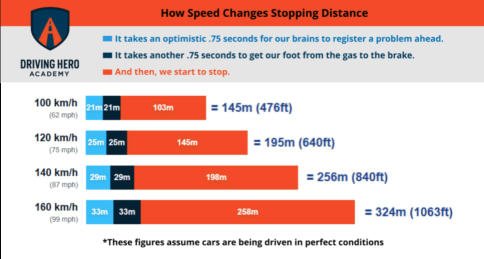
This is why "keep it between the
lines" is such dangerous
instruction. It trains a new driver to
look at the road immediately in
front of the car. A driver looking
that close to the vehicle has almost
no time to perceive and react to
anything that develops further
ahead, and their full perception-
reaction distance is already spent
before braking even begins. The
driver who is looking far enough
ahead is the driver who sees a
problem developing before it
becomes an emergency.
Now apply this to
distracted driving.
When a driver looks at their phone,
a map screen, or their passenger,
the thought is usually "it is just a
couple of seconds." Research shows
that drivers consistently
underestimate how long they
actually look away, but for the sake
of argument, accept the two
seconds at face value. The issue is
not the time. It is the distance
travelled in 2 seconds.
At 50 km/h (31 mph), two seconds
of looking away means your vehicle
has travelled approximately 28
metres (30 yds) while you were
seeing nothing that was happening
in traffic. When you look back up,
something may have changed in
the traffic scene in front of you.
Now your full perception time and
reaction time still have to run their
course before braking even begins.
The distance in which you are
effectively blind is added directly
on top of the distance you were
already going to need just to stop.
No driver, regardless of training,
experience or skill, can text and
drive safely. Not because they lack
discipline. Because physics does
not negotiate.
How to Structure a
Driving Lesson That
Actually Builds Skills
Before getting into the specifics of how to structure each session, there is a mindset shift that changes everything about how the teaching relationship works. Think of yourself as driving the car through your new driver. You are guiding them, the one deciding where the lesson takes place, what skills are being practised, and when the environment is appropriate for where your new driver actually is in their development. That means if something goes wrong, the accountability sits with you, not with them. You put them there. You called the shots on where, when, and how. This is not about blame. It is about protection - for the new driver's confidence as much as for their safety. A teenager who makes a mistake in an environment they were not ready for does not need to hear frustration, yelling, blame or silence. They need to hear: "I am sorry, I did not explain that well enough, let us try again." Or: "I am sorry, I should not have had you on that road yet, we were not ready for it." That kind of accountability from the parent preserves the new driver's sense of "I can do this" at the moments when it is most fragile. And it keeps the parent honest about progression - because a parent who knows they are responsible for the environment is far less likely to push a new driver into situations they are not ready for. The new driver is relying on the parent to keep this safe and to make good decisions about when to advance and when to stay put. Owning that responsibility is what makes the difference between a teaching relationship built on trust and one built on tension. With that foundation in place, a few specific practices make a consistent difference to how each in-car session actually goes. Learn to control the car from the passenger seat. Before any in-car lessons begin, a parent should know how to manage as much of the car as possible from the passenger side. This is not about being dramatic. It is about having genuine options if a situation develops that the new driver cannot handle. Knowing where the controls are, what you can reach, and how to use your voice to guide a correction calmly is part of being prepared, not part of panicking. (In my opinion, the best training cars are older vehicles with a hand brake.) Plan the lesson, not just the drive. Before each session, know specifically what skill you are going to work on and why it comes at this point in the learning progression. Then make it the new driver's job to plan a route that will give you the opportunity to practice that skill, without accidentally ending up on a freeway on-ramp before either of you is ready for it. Have them share the planned route with you before you leave so that both of you know exactly where you are going and what you are working on. A new driver who has thought about the route is less anxious and feels more prepared. A parent who has a plan with a specific goal for the session is less likely to find themselves reacting to the unexpected. Name the location before the action. When giving directions, always say where first, then what you want the new driver to do. "At the stop sign, we will turn right" rather than "turn right at the stop sign." This simple sequence gives the new driver's brain time to process and prepare rather than react. It reduces anxiety and produces smoother, more controlled responses. It sounds like a small thing and it makes a very real difference. Never move to a more complex environment until the current one is genuinely solid. The instinct to progress quickly is understandable. The new driver is eager, the parent wants to feel like things are moving forward. But introducing complexity before the underlying skills are automatic does not accelerate learning. It creates stress, builds bad habits, and erodes confidence on both sides of the car. Each environment, from the parking lot to residential streets to arterial roads to highways, should feel genuinely comfortable before the next one is introduced. If it does not feel comfortable, they are not ready.The Thing About the
Back Seat
Long before your teenager ever sat behind a wheel, they were already learning to drive. From the back seat. Watching you. The way you handle a merge. Your following distance. How you respond to a driver who cuts you off. What you do when you are running late and traffic is not cooperating. They absorbed all of it, for years, without either of you realizing it was happening. This is not a reason for alarm. Most experienced drivers manage traffic reasonably well most of the time. But it does mean that some of what you are working to build in your teenager has already been taking shape, formed silently, without a lesson or a word ever being exchanged. Some of those absorbed patterns will be good ones. Some may be habits you would not have chosen to pass on if you had known you were passing them on. Understanding that is not about assigning blame. It is about recognizing that the two of you are in this together in a more complete way than you might have realized. The conversations you have about driving, the framework you build together before you get in the car, and the deliberate attention you bring to the teaching process matter more than any single lesson. No driving school timetable to road test can match you in this process. You can take the time to really make sure they get it. You will take their skill development more seriously because no hourly wage driving instructor loves your kid as much as you do and they have more students waiting in the wings. The very best instruction can only come from the person in the passenger seat who has the most at stake, and who knew this teenager long before they ever got behind a wheel. If you would like some guidance, we do that. Being a good driver and teaching someone else to drive are two very different skills. Every parent who has found the passenger seat harder than expected has not discovered something wrong with themselves. They have discovered exactly what this article is about. The knowledge gap is real, it is normal, and it is entirely bridgeable. A parent who understands what is actually happening in that car, who prepares before the drive rather than improvising during it, and who meets their new driver where they genuinely are rather than where they imagine them to be, is the most valuable thing a new driver can have. Not because they are a professional instructor. Because they are invested in this outcome in a way no professional instructor ever could be. That is enough. With the right preparation, it is more than enough.Frequently
Asked
Questions
Why is teaching my
teenager to drive
causing so much
conflict?
There is rarely just one cause. The tension in the car usually comes from several things happening at once, and different families run into different combinations. Some of the most common: • The language gap. The parent sees a risk developing and reacts to it, but has no words ready to explain what they saw or why it mattered. What comes out sounds like alarm or criticism. The new driver, who was not seeing what the parent was seeing, has no idea what just happened. • The expectation gap. Some parents unconsciously expect the new driver to respond to traffic the way an experienced driver would. The new driver is doing everything they know how to do. The gap between those two realities produces frustration on both sides without either person understanding why. • The new driver who thinks they already know. Most new drivers believe, sincerely, that they have a reasonable handle on this. They have been watching people drive their entire lives. When a parent raises a concern the new driver cannot see the point of, it reads as over-protectiveness rather than expertise. The parent ends up in an argument they cannot easily win, because the new driver has no framework yet to understand what the parent is actually seeing. • No plan. Many parents get in the car expecting to teach as they go. Without a clear progression, a specific focus for each session, and shared language built before the drive, the lesson defaults to reaction. Reactive teaching in a moving vehicle is stressful (and ineffective) for everyone. • The authority problem deserves a specific mention. Even when a parent is completely right about something, getting a teenager to accept it is not always straightforward. One of the advantages of working within a structured, research-backed program is that the guidance stops being just the parent's opinion. When what you are teaching has already been validated by an established system, the dynamic shifts. You are no longer asking them to take your word for it. That changes the conversation.Am I qualified to teach
my teenager to drive?
The better question is whether you are prepared. Every parent brings real value to this process: years of accumulated road sense, genuine knowledge of their teenager, and a personal investment in the outcome that no hourly instructor can match. What most parents find challenging, without specific preparation, is translating what they know instinctively into language a new driver can actually use. That gap is bridgeable with the right approach.My teen just passed
their road test. Is that
not enough?
The road test confirms minimum competency in calm, controlled conditions. It is not designed to assess readiness for real-world driving: highway entry at speed, managing unpredictable drivers, handling unexpected hazards, or reading developing traffic patterns. Crash risk is highest in the months immediately after licensing, which reflects exactly this gap. Passing the test is the beginning of the process, not the end of it.How much practice
does my teenager
actually need before
driving alone?
There is no reliable magic number. Most licensing programs across North America require somewhere between 40 and 60 hours of supervised practice before a teenager can test for an unrestricted license, and some states and provinces require more. But research has consistently found no clear relationship between hours logged and crash rates after licensing. A new driver who has practised 60 hours on familiar quiet streets is not necessarily safer than one who has practised 30 hours across a genuine range of environments, conditions, and traffic situations. The question to ask is not whether enough hours have passed, but whether the skills required for each environment have been genuinely mastered before moving to the next one.Would a driving school
not be better than
teaching my teenager
myself?
A driving school and a parent are not an either/or choice. Standard driver education is structured to prepare students for the road test, which is a minimum competency assessment. Most programs deliver a limited number of in-car hours and depend on parents to provide the majority of supervised practice time regardless of whether a school is involved. The parent's role in producing a genuinely skilled driver is larger than most people realize, with or without a driving school in the picture.How will I know when
my teenager is actually
ready to drive
independently?
A new driver is genuinely ready for independent driving when vehicle control is automatic rather than effortful, when they consistently notice developing hazards before those hazards require a reaction, and when they make sound, calm decisions across a full range of conditions including highways and higher-traffic environments. These are observable behaviours, not a feeling. If you are not sure whether your teenager has reached this level, err on the side of more supervised practice.How do I stay calm
when my teenager
does something that
scares me?
Understanding the many reasons why it happens is the first step. Parents lose their composure in the car for several reasons that all arrive at once: • They are seeing risks their new driver cannot see yet, and the gap between what seems obvious to the parent and what the new driver is registering is genuinely alarming. • They feel helpless on the passenger side, unsure of what they can actually do if something goes wrong. • They went in expecting to teach as they go, and discovered that winging it is a terrible strategy. • They do not have language ready for what they are seeing. • They are trying to meet a new driver where they imagine they are, rather than where they actually are. Any one of those things would be stressful. All of them together produce panic. The solution is preparation that addresses each of them specifically: know what you can do from the passenger seat before you get in the car. Have a progressive plan so you are never in an environment the new driver is not ready for. Build the language before the drive. And understand from the start that being a good driver and teaching someone else to drive are two very different skills. The parents who go in knowing that are significantly calmer than the ones who find it out the hard way.How do I talk to my
teenager about phones
and distracted driving?
Don’t make it a conversation about rules. crash statistics, or trust, and make it a conversation about physics. The section in this article on why distracted driving is more dangerous than your teenager thinks covers this in detail, but the core of it is this: stopping does not happen the moment you decide to stop. By the time your brain registers a problem and your foot reaches the brake, your vehicle has already travelled a significant distance at full speed. Looking away from the road for even two seconds adds that entire distance on top of an already existing handicap. At 50 mph, two seconds of looking at a phone means your vehicle has covered the length of half a football field while you were seeing nothing. When you look back up, your full perception and reaction time still has to run its course before braking even begins. This is not a judgment about discipline or maturity. It is a physics problem, and physics applies equally to every driver regardless of how good they think they are. A teenager who understands the actual numbers is in a much better position to make an informed decision than one who has simply been told not to. Show them the numbers. Walk them through the stopping distance section together. It is a harder argument to dismiss than "because I said so."References
Simons-Morton, B. et al. Parent Involvement in Novice Teen Driving: Contributions to Research, Practice and Policy. Journal of Safety Research, 2006. Insurance Institute for Highway Safety. Teenagers: Graduated Licensing. 2024. Children's Hospital of Philadelphia and State Farm. Driving Through the Eyes of Teens. National Highway Traffic Safety Administration. Teen Driving.About the Author
La Velle Goodwin is a collision prevention specialist and the founder of Driving Hero Academy. She spent 13 years as a senior instructor at one of North America's most rigorous driver training organizations, completing a certification requiring substantially deeper training in crash causation, driver psychology, and instruction methodology than standard driving instructor licensing, with mandatory annual recertification. She delivered the organization's commercial driver training program, working directly with experienced professional drivers and observing first-hand the psychological resistance that makes behaviour change so difficult to achieve in that population. After leaving, she founded a corporate entertainment company whose programs were built entirely on competitive psychology - using the human drive to compete to move people toward behaviour they would never choose if simply told to. That work ran for over a decade across clients including oil and gas companies, Canada Post, and the Calgary Board of Education. The Crash Proof System brings those two bodies of expertise together: the science of how collisions develop, and the psychology of what actually makes people change.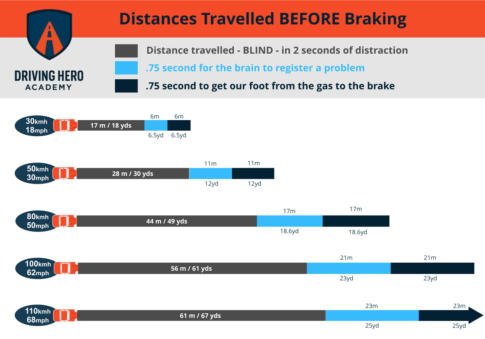
Find out where you
stand.
The Driving Coach Readiness Assessment will help you understand what you are bringing into this process and what a structured teaching approach can add to it. It takes about five minutes and it’s free.Find out where you
stand.
The Driving Coach Readiness Assessment will help you understand what you are bringing into this process and what a structured teaching approach can add to it. It takes about five minutes and it’s free.




ACADEMY



DRIVING HERO


What Nobody Tells Parents
Before They Get in the Car



